
Michelangelo vs. Raphael: The Secret Vatican Feud That Changed Art Forever
Imagine stepping into the Vatican in the year 1508 to witness the ultimate Michelangelo vs Raphael rivalry. Walk down one corridor, and you’ll find a brooding, solitary genius locked in a room, sweating over a scaffold, and refusing to let anyone see his work. Walk down another, and you’ll meet a charming 25-year-old prodigy throwing lively gatherings while effortlessly painting masterpieces with a team of talented assistants.
This wasn’t just a friendly rivalry—it was a high-stakes Renaissance showdown orchestrated by Pope Julius II. Just a few feet apart in the Papal Palace, Michelangelo Buonarroti and Raphael Sanzio were competing for glory, artistic supremacy, and the Pope’s favor.
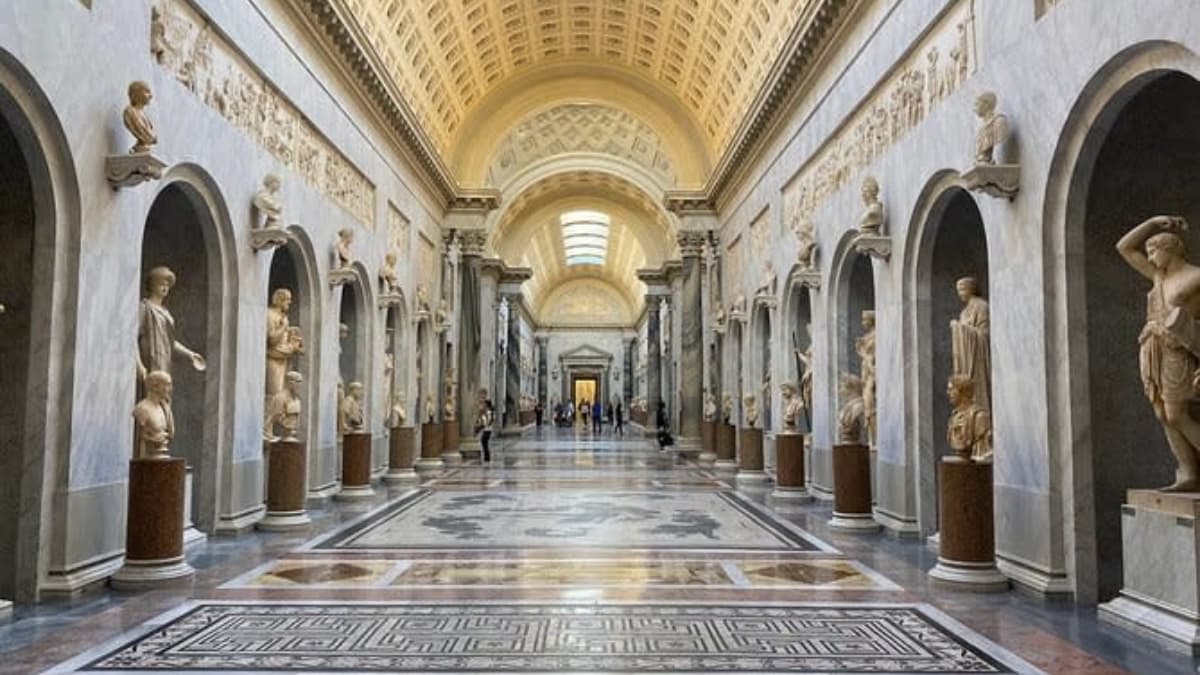
Today, millions of travelers walk these same halls. But to truly appreciate what you’re seeing, you have to look past the crowds and uncover the fiery clash of personalities behind two of the greatest masterworks in human history.
1. Michelangelo vs Raphael: Fire and Fury vs. Harmony and Grace
While both masters were redefining High Renaissance art, their approaches could not have been more different.
While both masters were redefining High Renaissance art, their approaches could not have been more different:
Michelangelo: Driven by drama, intense spiritual strength, and inner tension (terribilità). His figures are muscular, dynamic, and deeply sculptural, brought to life with iridescent colors and striking contrasts between light and shadow. A fierce lone wolf, he insisted on working in complete solitude.
Raphael: Driven by harmony, perfect balance, and ideal beauty. His work features soft lines, gentle faces, graceful proportions, and a serene, measured sense of perspective using warm tones and delicate sfumato lighting. A charismatic courtly master, he directed a highly organized and bustling studio.
Michelangelo: The Reluctant Painter
Michelangelo didn’t even want to paint the Sistine Chapel ceiling. He considered himself a sculptor first and foremost, suspecting his rivals had tricked the Pope into assigning him the fresco project hoping he would fail.
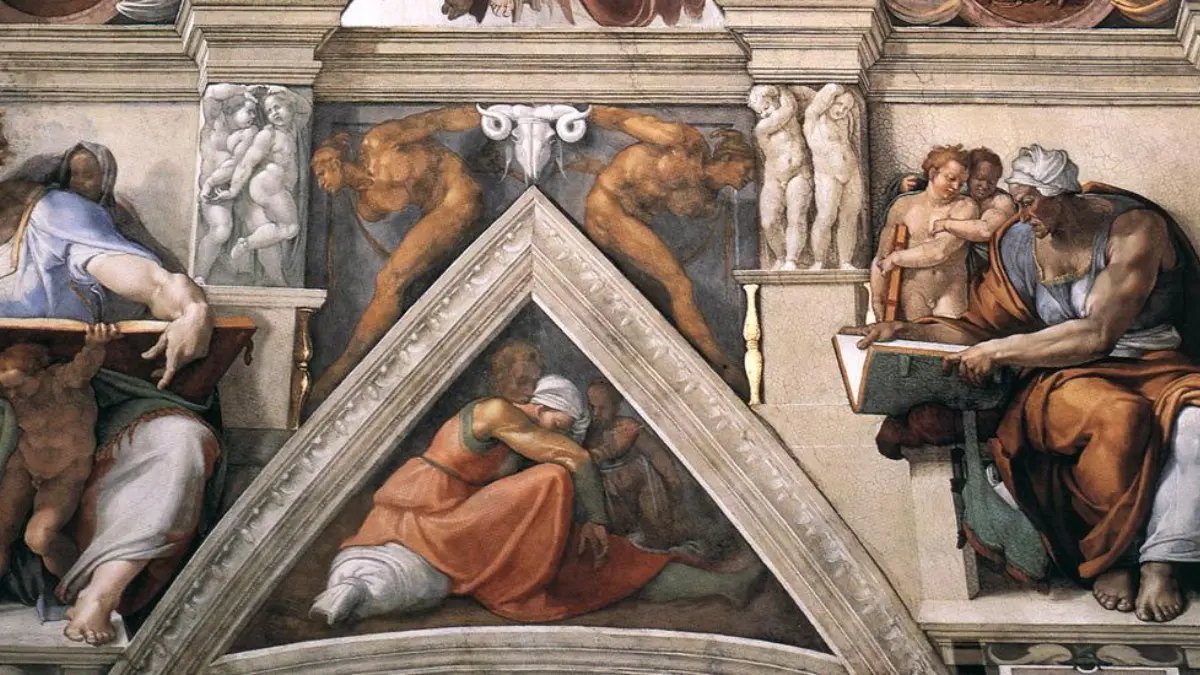
Instead, he channeled his frustration into sheer physical power. Every figure on the Sistine ceiling—from God reaching out to Adam to the muscular prophets—looks like it was carved directly out of marble before being brushed onto the plaster. His style was defined by terribilità: an awe-inspiring, formidable intensity that leaves viewers utterly spellbound.
Raphael: The Master of Harmony
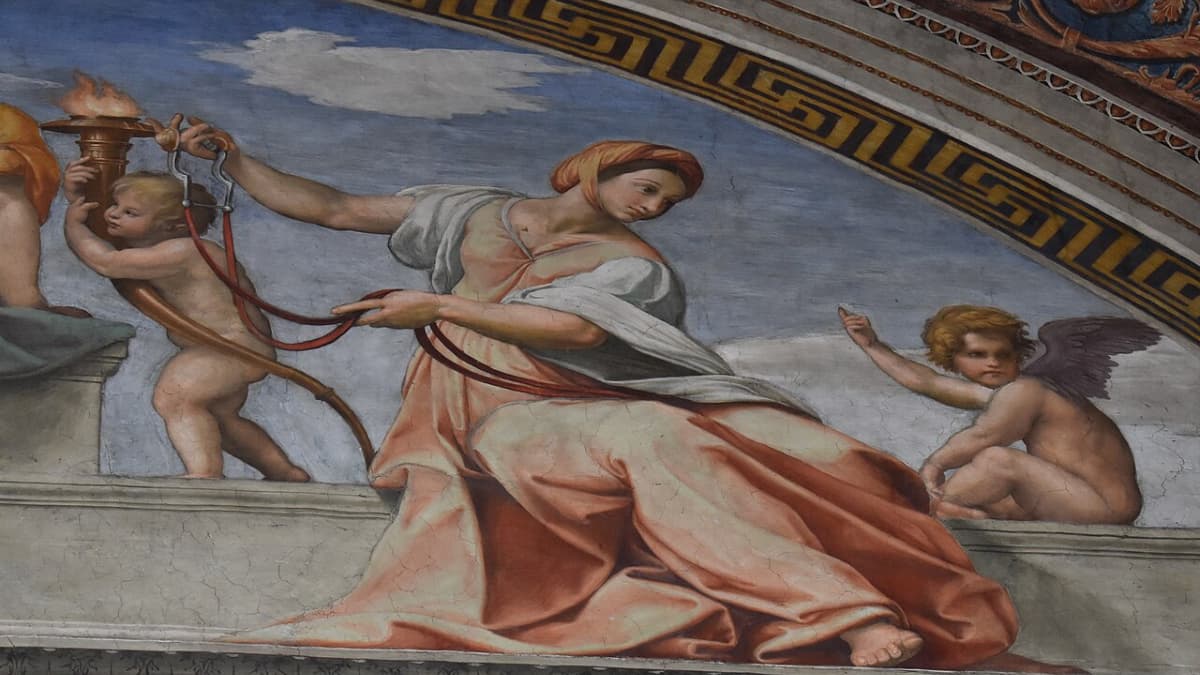
While Michelangelo labored in grueling solitude, young Raphael arrived in Rome like a breath of fresh air. Genial, handsome, and impeccably polished, Raphael possessed an uncanny gift for taking the best techniques of his peers—Leonardo da Vinci’s soft lighting and Michelangelo’s dynamic figures—and synthesizing them into pure, poetic perfection.
Where Michelangelo delivers drama and divine tension, Raphael offers balance, luminous beauty, and an effortless sense of calm.
2. Walk in Their Footsteps: Must-See Masterpieces in the Vatican
The Stanza della Segnatura: Raphael’s Ultimate Easter Egg
In Raphael’s breathtaking fresco The School of Athens, ancient history’s greatest philosophers gather in a grand classical hall. But look closely at the central figures—Raphael actually painted his famous contemporaries as these ancient thinkers!
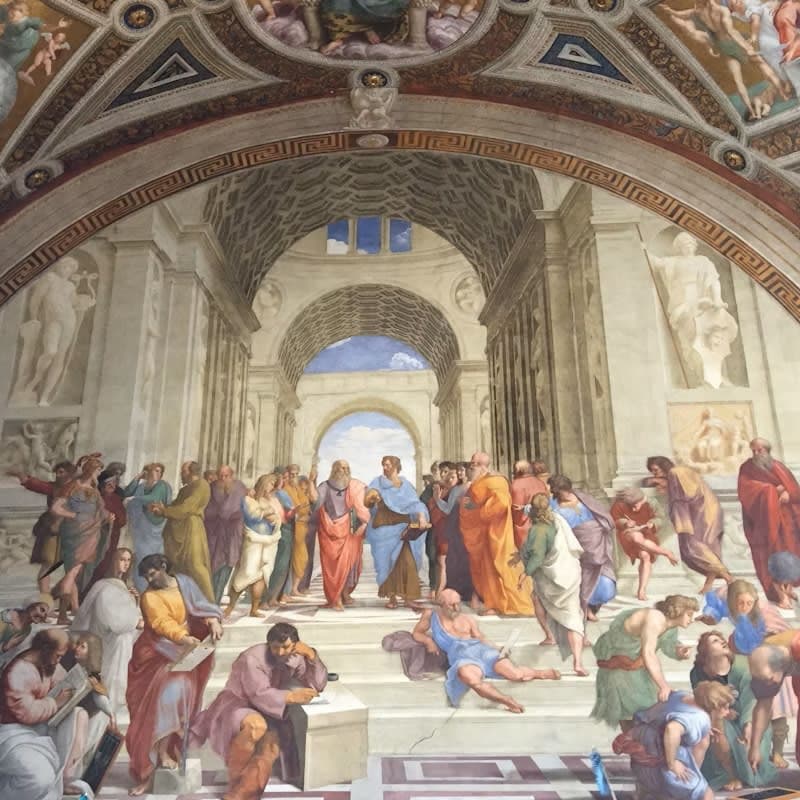
Plato bears the unmistakable face of Leonardo da Vinci.
Heraclitus, the moody philosopher resting his head on his hand in the foreground, was added late in the process. It is a direct portrait of Michelangelo, wearing his sculptor boots! Raphael added this quiet homage after sneaking a peek at Michelangelo’s ongoing work in the Sistine Chapel.
The Sistine Chapel: Standing Beneath Genius
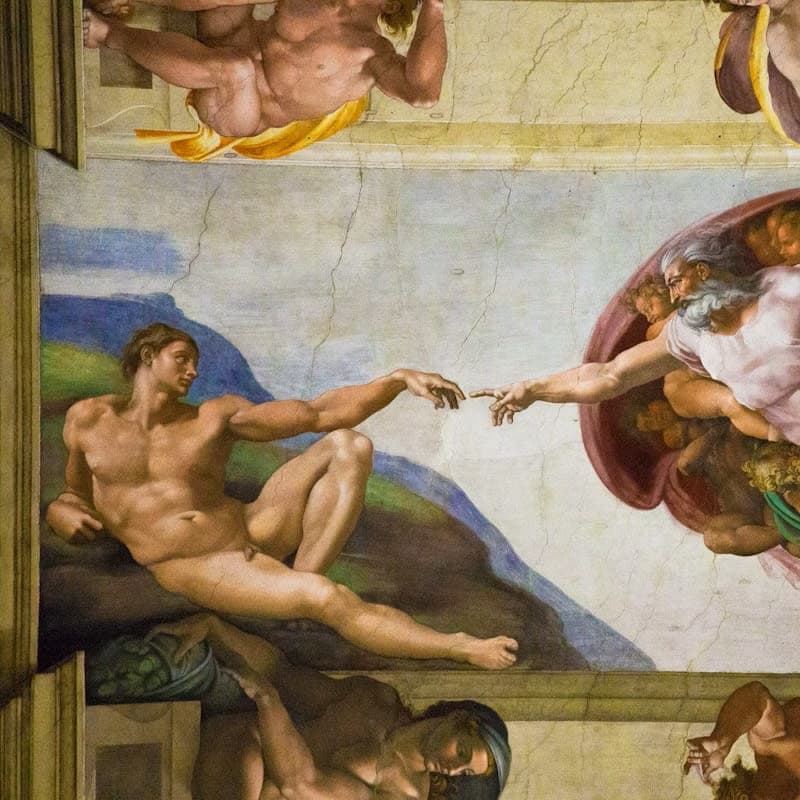
Just steps away from Raphael’s rooms lies the Sistine Chapel. Look up at the ceiling to witness the iconic Creation of Adam, where the fingertips of the Divine and mankind come within a fraction of an inch of touching—a moment charged with infinite potential.
Years later, Michelangelo returned to paint The Last Judgment on the altar wall, creating a darker, soaring masterpiece of cosmic judgment that contrasts sharply with the optimistic energy of his younger years.
🎟️ Planning Your Visit to the Vatican? Don’t Get Stuck in Line!
Traveler Tip: The Vatican Museums attract tens of thousands of visitors every day. Ticket lines can easily stretch over two hours in the heat, draining your time and energy. To make the most of your time in Rome, secure skip-the-line priority access or a guided tour in advance.
3. Quick Vatican Art Trivia: Impress Your Travel Companions
Did Raphael really sneak into the Sistine Chapel?
Legend has it that while Michelangelo was taking a break, Donato Bramante (the Vatican architect and Raphael’s friend) let Raphael sneak inside to see the unfinished ceiling. Raphael was so struck by Michelangelo’s powerful figures that he immediately went back to The School of Athens and added Michelangelo into the foreground!
Why do Michelangelo’s painted figures look so muscular?
Michelangelo spent years dissecting human corpses to master anatomy. Because he viewed the body through a sculptor’s lens, even his painted female figures have the athletic, muscular frame of classic marble statues.
Ready to See the Magic Live?
Reading about the clash of these two giants is one thing, but standing beneath the towering ceiling of the Sistine Chapel or gazing across the vibrant hall of The School of Athens is an unforgettable bucket-list experience.
Make sure your dream trip to Rome goes smoothly without wasted hours in ticket queues:
Explore More of Ancient Rome
Planning your Rome itinerary? Don’t miss our complete travel guide on how to visit the Colosseum and Arena floor for tips on tickets, entry gates, and top highlights!